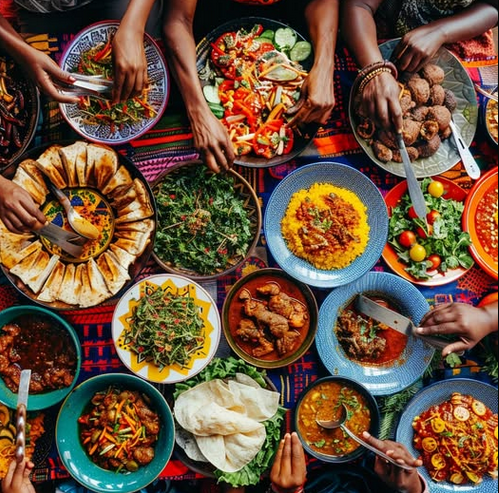
At the heart of Arusha, where buses roar and passengers hurry from one destination to another, there is a corner that smells not of diesel but of comfort. It is here, at the bustling Arusha bus stand, that one finds Mama Mchuuzi/mama Asha, a woman whose name is almost synonymous with Loshoro—a traditional dish of maize and milk that has fed both locals and travelers for generations.
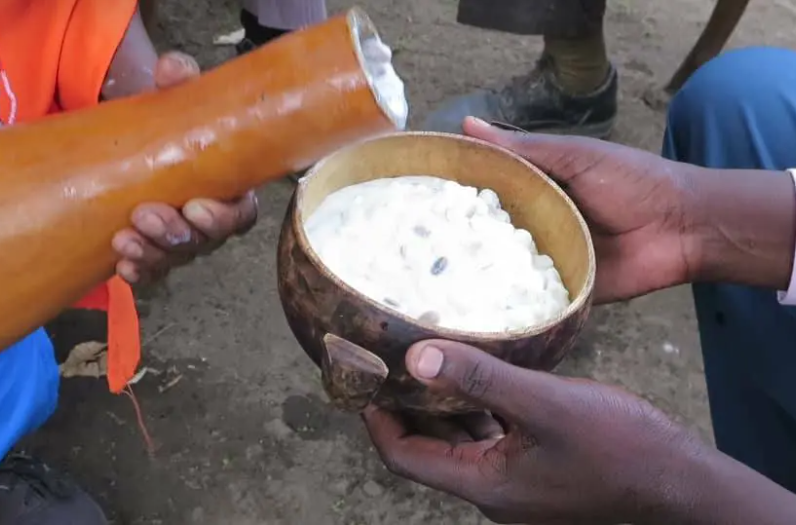
Mama Asha’s story begins nearly twenty years ago. Newly widowed and struggling to raise three children, she looked for a way to survive. With nothing more than her grandmother’s recipe and a borrowed pot, she set up a small food stall at the bus stand. At first, people hesitated. Loshoro was considered a home dish, eaten in the privacy of the Maasai bomas or during family gatherings. But slowly, passengers waiting for their buses began to taste. One bowl led to another, and soon Mama Asha’s Loshoro became a daily ritual for countless people on the move.
Her preparation is simple but rooted in tradition. Fresh maize kernels are ground coarsely, mixed with milk, and cooked slowly until creamy. Sometimes she adds a pinch of salt, sometimes a dash of butter, but always the same warm smile accompanies the steaming bowl.
What makes Mama Asha’s story remarkable is not just her food but her resilience. She has seen the bus stand change over the years—modern buses replacing old ones, new shops opening and closing—but her Loshoro stand remains constant. Many travelers claim their journey is incomplete without stopping by her corner. Students heading back to school, workers catching the early bus, even tourists curious to try “that famous porridge”—all line up to be served by Mama Asha.
“Loshoro is not just food,” she often says. “It is energy for the road, and comfort for the soul.” Indeed, it is more than a meal—it is a cultural symbol that connects people to the land and to each other.

Beyond her stall, Mama Asha’s influence has grown. She has trained two young women in her neighborhood to cook Loshoro, helping them start their own businesses. She says she dreams of one day opening a small café named Loshoro La Mama, where people can sit, share stories, and taste the heritage of Arusha.
Travelers often recall the moment vividly: the clatter of buses in the background, the shouts of ticket conductors, the hum of the crowd—and then, amidst all this chaos, the calm of a warm bowl in hand. Many take photos with Mama Asha, saying she is as iconic as the bus stand itself.
Her story is one of perseverance, tradition, and hospitality. It shows how a single dish, cooked with love, can create community and keep culture alive even in the busiest of places.
So, if you ever pass through Arusha, don’t just rush to your bus. Take a moment. Find the stall with the steaming pots and the ever-smiling woman. Order a bowl of Loshoro. With that first spoonful, you won’t just taste maize and milk—you’ll taste resilience, tradition, and the beating heart of Arusha itself.
Therefore jikonisafari.co.tz become the only platform where you will find the taste of loshoro near you.
Discussion Thread
No comments yet. Be the first to leave one!
Leave a Comment
Please log in to leave a comment or like a comment.